
HVAC Air Handling Unit (AHU)
What is Air Handling Unit (AHU), How It Works, and Why AMC Matters
5/17/20264 min read
What Is an Air Handling Unit?
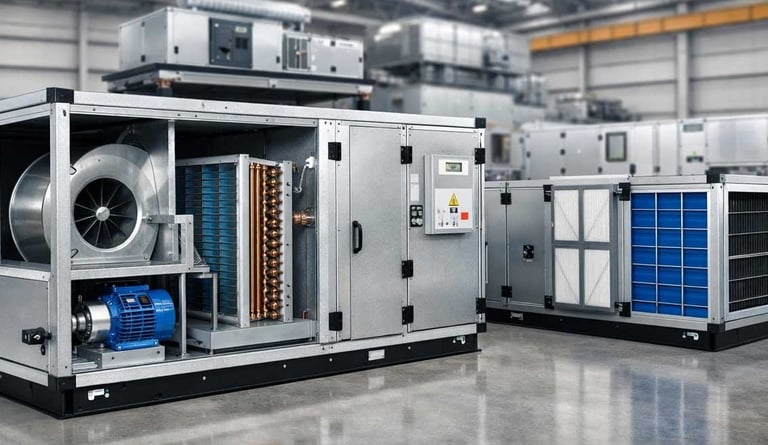
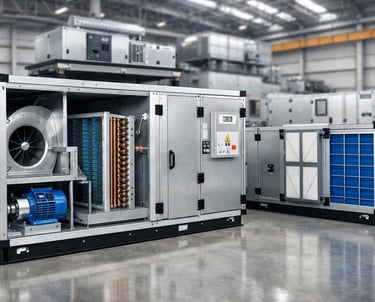
An Air Handling Unit is a box that conditions and circulates air as part of a central HVAC system. It takes return air from your building, mixes it with fresh outside air, filters it, cools or heats it, dehumidifies it, and then supplies it back through ductwork.Think of it as a self-contained air factory on your terrace or in the basement.
Typical capacity ranges from 500 CFM for small offices to 50,000+ CFM for malls and hospitals.
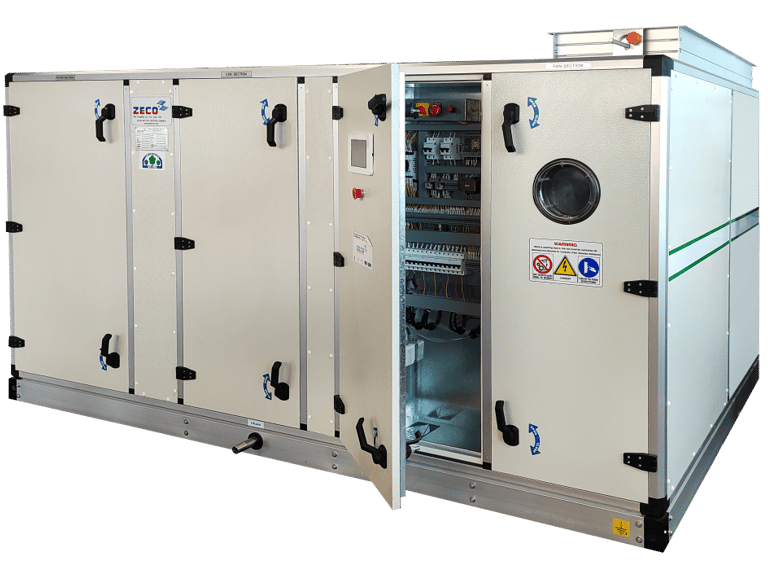
Key Components Inside an AHU
Air Filters - G4 pre-filters and F7/F9 fine filters catch dust, pollen, and PM2.5. Clogged filters are the #1 reason for low airflow and high power bills.
Cooling Coil - A bundle of copper tubes with aluminum fins where chilled water from the chiller flows. Air passes over it and gets cooled and dehumidified.
Blower/Fan Section - Centrifugal or plug fans push air through the system. Bearings and belts here wear out fast without lubrication.
Drain Pan & Trap - Collects condensate water from the coil. A choked drain leads to water leakage and mold.
Mixing Box & Dampers - Controls the ratio of fresh air vs return air. Wrong settings spike energy costs.
Humidifier/Heating Coil - For hospitals and labs that need precise humidity control.
Silencer & Vibration Isolators - Keeps noise and vibration out of office spaces.
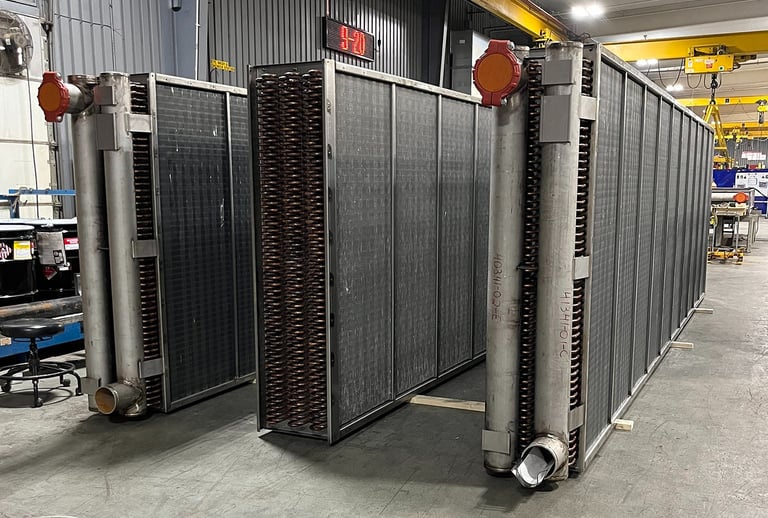
How an AHU Works in 4 Steps
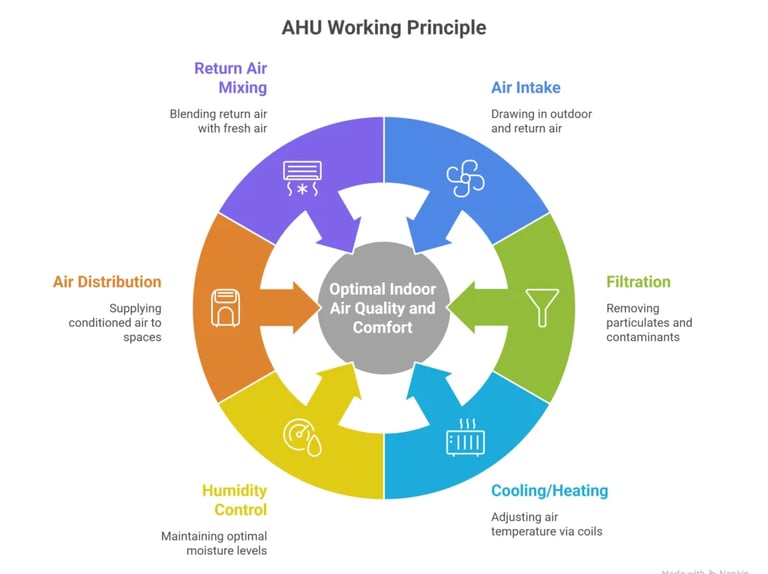
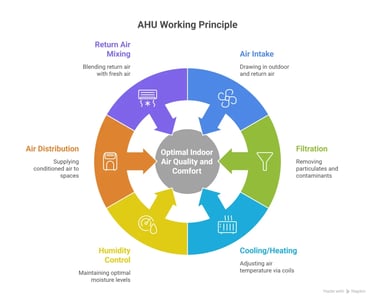
Intake : Return air from rooms + fresh air from outside enters the AHU through dampers.
Filtration : Air passes through pre-filters and fine filters to remove dust and bacteria.
Conditioning : Air flows over the cooling coil. Heat and moisture transfer to the chilled water. For heating, it passes over hot water or electric coils.
Supply : The fan pushes conditioned air through ducts to diffusers in your rooms. The cycle repeats.
5 Signs Your AHU Needs Immediate Attention
High Power Bills: Dirty coils and filters force the chiller to work harder. A 1mm dust layer on a coil can increase energy use by 15%.
Weak Airflow / Hot Spots: Rooms don’t cool evenly. Usually a belt slip, dirty filter, or fan issue.
Water Leakage: Blocked drain pans cause ceiling stains and mold growth.
Bad Odor: Microbial growth on wet coils and pans creates a musty smell.
High Noise & Vibration: Worn bearings or unbalanced fans. If you can hear the AHU in the office, it’s already overdue for service.


Why AHU AMC Is Non-Negotiable in India
Delhi NCR’s dusty air and 45°C summers are brutal on AHUs. A “run-to-fail” approach means:
Emergency breakdowns in peak summer when contractors are booked for 2 weeks.
20-30% higher power consumption due to dirty coils.
Poor IAQ leading to sick building syndrome and tenant complaints.
A proper Annual Maintenance Contract for AHUs follows ASHRAE 180 guidelines and includes:
Quarterly chemical coil cleaning, not just dry brushing.
Blower balancing, bearing lubrication, belt tension checks.
Drain pan cleaning and trap flushing to stop water leakage.
CFM and static pressure testing to verify performance.
Photo and video reports after every visit so you know what was done.
Good AMC cuts breakdowns by 80% and pays for itself through energy savings in 4-6 months.


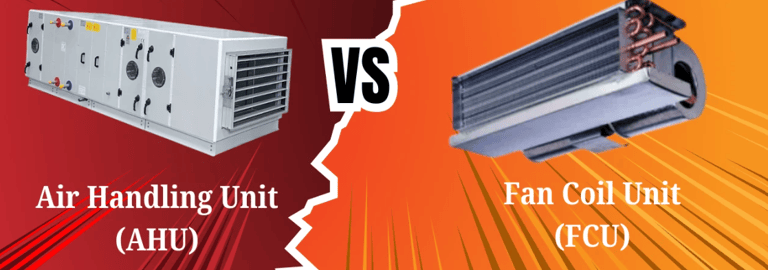
AHU vs FCU: What’s the Difference?
AHU: Central unit for large areas. Handles 100% fresh air, high CFM, placed in plant rooms.
FCU: Small unit for individual rooms. No fresh air, lower CFM, installed inside false ceilings.
Most commercial buildings use AHUs for common areas and FCUs for cabins.
How to Extend AHU Life from 8 Years to 15 Years
Run quarterly preventive maintenance. Don’t wait for monsoon.
Change pre-filters every 30-60 days in dusty areas.
Keep logbooks for pressure drop, motor amps, and supply air temperature.
Ensure proper water treatment on the chilled water side to prevent coil scaling.
Don’t run the AHU with choked filters “just for one week”. That one week kills the motor.

Contact
Reliable HVAC solutions tailored for industry
Phone
+91-9311564042
© 2026. All rights reserved.